Kew Gardens
Royal Botanic Gardens: Palm House, treetop walkway and a UNESCO listing
- Area Kew
- Type Park
- Time needed 3h
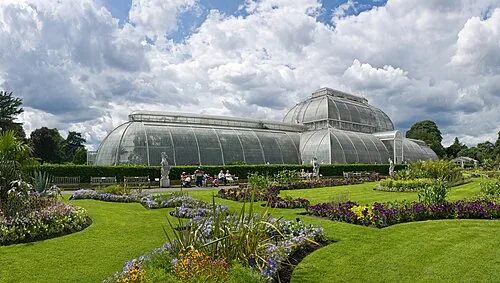
The Royal Botanic Gardens at Kew are 300 acres of botanical collection and glasshouse on the Surrey bank of the Thames in south-west London, founded in the 1750s and made a UNESCO World Heritage Site in 2003. Kew holds the largest collection of living plants in the world, backed by a seed bank and a herbarium that are working scientific institutions rather than displays. The Palm House of 1848, a curved iron-and-glass cathedral full of tropical trees, is the building people come to see, along with a walkway built eighteen metres up in the tree canopy.
Open in the planner → Tours and entry ticketsGetting there
Kew Gardens station is served by both the District line Richmond branch and the Overground Mildmay line, which is unusual and useful — the District line runs it direct from Victoria, Westminster and Earl's Court in around thirty-five to forty minutes, and the Overground brings you in from Richmond or from north London via Willesden Junction. From the station it is a five-minute walk through Kew village to Victoria Gate, the main entrance. Kew Bridge National Rail station, on the line out of Waterloo, is about fifteen minutes' walk from Elizabeth Gate on the other side. In summer a riverboat runs up from Westminster, a long slow trip best treated as the day's sightseeing rather than as transport.
What you see
Through Victoria Gate the Palm House is directly ahead across the pond: a 1848 Decimus Burton and Richard Turner structure of curved glass on iron ribs, hot and dripping inside, with a spiral stair up to a walkway at canopy level among the palm crowns and a marine display in the basement. The Temperate House next to it is larger still and was reopened in 2018 after a long restoration, holding plants from the cooler parts of the world under the biggest surviving Victorian glasshouse in the world. The Princess of Wales Conservatory divides itself into climate zones from desert to swamp in a single roof, with carnivorous plants and waterlilies. Outside, the Treetop Walkway lifts you onto a steel deck in the crowns of sweet chestnut and oak, reached by stairs or a lift. The Great Pagoda of 1762, a ten-storey Chinese-style tower with gilded dragons restored onto its roofs, stands at the far south of the gardens, a good half-hour walk from the entrance. The Arboretum, the Japanese Gateway, the Rock Garden and Kew Palace — a small red-brick Georgian royal house near Elizabeth Gate — fill the gaps, and the Marianne North Gallery is a single room papered floor to ceiling with 832 botanical paintings by one Victorian traveller.
What to pair it with
Richmond Park is a short ride further along the District line and a walk from Richmond station. Hampton Court Palace is reachable the same day if you start early. Little Venice and the canal are an easy Overground connection if you want a contrast.
When to go
Spring is the strong season: bluebells in the woodland, magnolias and the blossom walk from March into May. Autumn gives the Arboretum colour and the clearest air for the Treetop Walkway. Winter is the time for the glasshouses, when stepping into the Palm House is the whole point and the gardens are nearly empty. Weekday mornings right at opening are the quietest, and school holidays plus warm weekends are the busiest by a wide margin. Allow for the fact that the glasshouses shut earlier than the grounds, so arriving after mid-afternoon in winter risks missing them.
What is hard about it
Kew is expensive relative to London's free museums and there is no way round the ticket; booking a timed slot online before you go is normally cheaper and sometimes necessary. It is also very large — the Pagoda is a serious walk from the main gate, and people routinely underestimate the distances and run out of energy before they have seen half of it. A land train runs a circuit in season but not always, and not everywhere. The glasshouses close for maintenance in rotation, and the Treetop Walkway closes in high wind, so check before you go. In rain there is less cover than you would expect for a place made of greenhouses. The Palm House in summer is genuinely uncomfortable, well above thirty degrees and humid, and anyone who struggles with heat should keep the visit brief.
Common questions
How long do you need at Kew Gardens?
Three hours is the realistic minimum for the main glasshouses, the Treetop Walkway and a loop of the nearer grounds. A full day is easy if you want the Pagoda and the Arboretum as well.
Which station is best for Kew Gardens?
Kew Gardens station, five minutes from Victoria Gate, served by both the District line and the Overground. Kew Bridge National Rail station is the alternative, about fifteen minutes from Elizabeth Gate.
Do you need to book tickets in advance?
Booking ahead is normally cheaper and is the safer option on warm weekends and in school holidays. Check before you go, as timed entry arrangements change.
More of the same kind
- St James's ParkThe oldest royal park, with a lake, pelicans and the best view of the palace
- Hyde Park350 acres with the Serpentine, Speakers' Corner and swimming in summer
- Kensington GardensThe Albert Memorial, the Italian Gardens and Peter Pan
- Regent's ParkNash terraces, the rose garden in Queen Mary's Gardens, and the zoo