British Museum
The Rosetta Stone, the Parthenon sculptures and eight million other objects
- Area Bloomsbury
- Type Museum
- Time needed 2h 30m
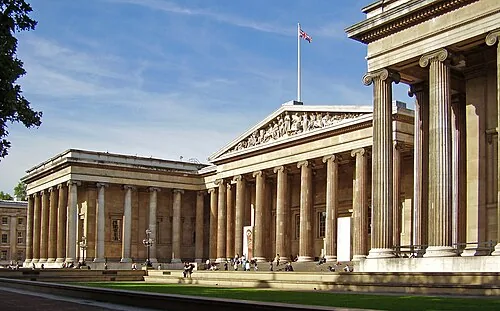
The British Museum holds around eight million objects and opened to the public in 1759, which makes it the oldest national public museum in the world. It fills a block of Bloomsbury between Great Russell Street and Montague Place, ten minutes' walk north of Covent Garden. Entry to the permanent collection is free, and most people come for three things: the Rosetta Stone, the Parthenon sculptures and the Assyrian reliefs. It is far too large to see in one visit, so treat it as a building you dip into rather than finish.
Open in the planner → Tours and entry ticketsGetting there
Tottenham Court Road (Central, Elizabeth and Northern lines) is the most useful station, about a seven-minute walk east along Great Russell Street. Holborn (Central and Piccadilly) and Russell Square (Piccadilly) are each a similar distance on the other sides. From Oxford Circus or King's Cross you are ten to fifteen minutes door to door on the Underground, and from either station walking is realistic in twenty minutes. The main entrance on Great Russell Street has a bag check, so allow a few minutes there; the quieter Montague Place entrance on the north side is worth knowing when the front queue is long.
What you see
You come in under the glass roof of the Great Court, which was only covered over in 2000 and wraps around the circular Reading Room at its centre. Straight ahead on the ground floor is the Egyptian sculpture gallery, where the Rosetta Stone sits in a case near the entrance and is almost always surrounded; the colossal bust of Ramesses II further down the hall gives you a better idea of the scale these things were made at. Turn left from the Great Court for the Assyrian rooms and the winged human-headed bulls from Nimrud, then the carved reliefs of the lion hunt from Nineveh, which repay slow looking more than anything else in the building. Room 18 holds the Parthenon sculptures in a long top-lit hall, with the frieze running at eye level. Upstairs are the smaller, stranger rooms: the Sutton Hoo helmet and ship burial finds, the Lewis chessmen, the Roman Britain material including the Mildenhall treasure, and the clocks and watches gallery that most visitors walk past. The Enlightenment Gallery along the east side shows how the collection was originally arranged, and is usually the calmest room in the museum.
What to pair it with
The museum sits within easy walking distance of Covent Garden and the Seven Dials streets to the south. Sir John Soane's Museum at Lincoln's Inn Fields is about fifteen minutes east and makes a deliberate contrast in scale. The British Library at St Pancras is a twenty-minute walk or one stop north if you want a second collection in the same day.
When to go
Mornings on weekdays just after opening are the quietest, and the Egyptian and Parthenon galleries fill up steadily from mid-morning onwards. Weekends and school holidays are busy all day, and half-term in February and late October is the worst of it. The Great Court is bright and pleasant in any weather, which makes this a sensible rainy-day choice. There are late openings on some evenings, when the galleries are noticeably emptier — check the current days before relying on it.
What is hard about it
The main complaint is scale: people arrive without a plan, walk for two hours and leave having seen corridors. Pick three or four rooms. The Rosetta Stone is small, behind glass and permanently crowded, and many visitors find it an anticlimax. The ownership of the Parthenon sculptures is contested and the gallery labelling of that dispute satisfies very few people on either side. Some galleries close at short notice for maintenance or rotation, and the museum has had periods of partial closure, so check which rooms are open before travelling for one specific object. Entry is free but the headline temporary exhibitions are ticketed and often sell out in advance. Lockers and cloakroom space are limited and charged for, and food inside is expensive for what it is.
Common questions
How long do you need at the British Museum?
Two to three hours is a realistic single visit covering three or four galleries properly. Trying to see everything in a day leaves most people exhausted and remembering very little.
Do you need to book?
The permanent collection is free and normally walk-in, though booking a free timed slot is sometimes encouraged at busy periods. Ticketed temporary exhibitions should be booked ahead.
Is the Rosetta Stone worth queueing for?
It is a genuinely important object but visually underwhelming and always crowded. Look, then spend your time on the Nineveh reliefs or the Sutton Hoo finds, which reward attention more.
More of the same kind
- Churchill War RoomsThe underground bunker from which Britain ran the Second World War
- National GalleryWestern European painting from Van Eyck to Van Gogh, free to enter
- HMS BelfastSecond World War cruiser moored in the Pool of London, nine decks to explore
- Tate ModernModern and contemporary art in a converted power station, free to enter
Part of these routes
- Bloomsbury and the galleriesThe British Museum at opening time, then paintings at Trafalgar Square and Millbank.
- London in three daysThe short list, ordered so each day holds together and nothing is crossed twice.
- London in five daysA fuller first visit: the centre, the City, the museums, the South Bank and a day in Greenwich.
- London at lengthEverything the other routes cover, spread over eight unhurried days with nothing rushed.