Tate Modern
Modern and contemporary art in a converted power station, free to enter
- Area Bankside
- Type Museum
- Time needed 2h
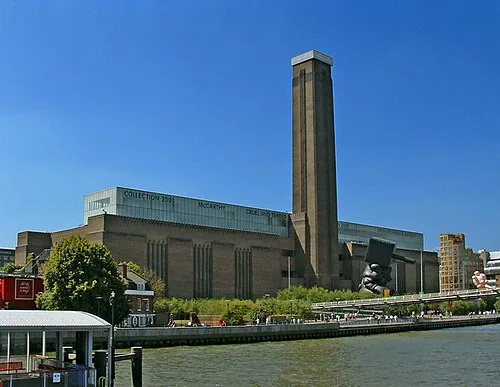
Tate Modern holds the national collection of international modern and contemporary art, in the converted Bankside Power Station on the south bank of the Thames opposite St Paul's. The building is a Giles Gilbert Scott brick hulk from the mid twentieth century, reopened as a gallery in 2000 and extended in 2016 with the Blavatnik Building behind it. Entry to the permanent collection is free, which makes it one of the easiest hours in London to fill well.
Open in the planner → Tours and entry ticketsGetting there
Blackfriars station is the nearest, on the Circle and District lines with Thameslink rail above, and from its south exit the gallery is a seven-minute walk east along the river. Southwark on the Jubilee line is a similar distance from the back of the building. St Paul's on the Central line puts you on the north bank, from where the Millennium Bridge delivers you straight at the gallery's front, and that approach is the one to choose if you have the option. River bus services call at Bankside Pier directly outside.
What you see
Walk in down the ramp into the Turbine Hall, the former generating hall left as raw volume, five storeys of empty space with a single large commissioned installation in it. Whatever is installed there changes, so take it as it comes, but the hall itself is the point. From there the collection sits on levels above in the original Boiler House: broadly themed displays rather than a chronology, which means you turn a corner from Rothko into something made last year. The Rothko room, with the dark Seagram murals in low light, is the one most people seek out, and there is reliable strength in Picasso, Matisse, surrealism and post-war American painting. In the Blavatnik Building the upper floors give over to performance, film and large installation work. Finish on the viewing level at the top of the Blavatnik Building, free to reach, which looks across the river to St Paul's and down into the Turbine Hall.
What to pair it with
Shakespeare's Globe is a three-minute walk east along the river. Borough Market is fifteen minutes further on. St Paul's Cathedral is straight across the Millennium Bridge.
When to go
Weekday mornings soon after opening are calmest, and the Turbine Hall is at its most impressive empty. Late afternoon is busy with school and tour groups. One evening a week the gallery stays open late, which is a good time to visit: fewer people, and the view from the top terrace at dusk is better than by day. School holidays and wet weekends fill the place up, since it is free and indoors.
What is hard about it
The hang is thematic and deliberately unsignposted, so if you arrive wanting to see a specific famous painting you may spend a while hunting for it, and it may not be on display at all. Rotation is constant. The building is large and the two halves connect awkwardly on some levels, which means more walking and lift-waiting than you expect. Major temporary exhibitions are ticketed, often expensive, and usually need booking. Some visitors find the contemporary upper floors thin: a lot of wall text for not much object. The cafes are busy and overpriced, and Borough Market is a better lunch.
Common questions
How long do you need at Tate Modern?
Two hours covers the Turbine Hall, one or two collection floors and the viewing terrace. A thorough visit to everything would take most of a day.
Is Tate Modern free?
Yes, the permanent collection and the Turbine Hall are free to enter. Large temporary exhibitions are ticketed separately.
Is it worth it with children?
Yes, largely because of the Turbine Hall and the scale of the installations. The quieter painting galleries will hold them less well.
Nearby
More of the same kind
- Churchill War RoomsThe underground bunker from which Britain ran the Second World War
- National GalleryWestern European painting from Van Eyck to Van Gogh, free to enter
- British MuseumThe Rosetta Stone, the Parthenon sculptures and eight million other objects
- HMS BelfastSecond World War cruiser moored in the Pool of London, nine decks to explore
Part of these routes
- South Bank walkOne riverside mile with a wheel, a power station full of art, a Tudor playhouse and a warship.
- London in three daysThe short list, ordered so each day holds together and nothing is crossed twice.
- London in five daysA fuller first visit: the centre, the City, the museums, the South Bank and a day in Greenwich.
- London at lengthEverything the other routes cover, spread over eight unhurried days with nothing rushed.