Tate Britain
British art from 1500 to now, and the Turner bequest
- Area Millbank
- Type Museum
- Time needed 1h 30m
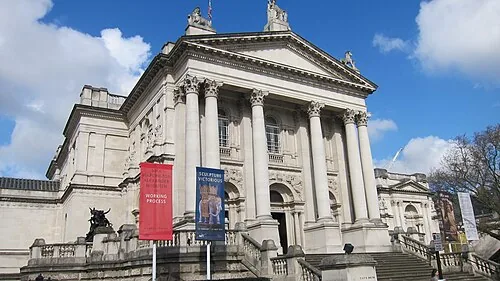
Tate Britain on Millbank, beside the river between Westminster and Vauxhall, holds the national collection of British art from 1500 to the present day. It was the original Tate, opened in 1897, and keeps the Turner bequest: the largest holding of J. M. W. Turner's work anywhere, left to the nation by the artist himself. Entry to the collection is free, and it is markedly quieter than Tate Modern.
Open in the planner → Tours and entry ticketsGetting there
Pimlico on the Victoria line is the nearest station, a seven-minute walk down Bessborough Street and along Millbank. Westminster, on the Jubilee, Circle and District lines, is about fifteen minutes north along the riverside, which is a good walk past the Houses of Parliament. Vauxhall is a similar distance south. The bus along Millbank stops outside, and a river boat service runs between Tate Britain's pier and Tate Modern, which is the pleasantest way to connect the two.
What you see
The main entrance opens into a domed rotunda with a wide staircase, and the collection reads as a walk through chronologically, which is the opposite of Tate Modern and much easier to follow. The early rooms hold Tudor and Stuart portraits, then Hogarth, Gainsborough and Reynolds, then the Romantics. Blake's small, strange watercolours and prints have their own low-lit room. The Pre-Raphaelites are the collection's crowd-pleaser, with Millais's Ophelia the single most-visited picture in the building. Beyond the chronology, the Clore Gallery holds the Turner bequest: oils in the main rooms, the late near-abstract paintings of light and weather, and rotating displays of the watercolours and sketchbooks, which are too fragile to show permanently. Twentieth-century British rooms cover Spencer, Bacon, Hepworth and Moore. The Rex Whistler mural wrapping the restaurant walls is worth a look on the way out, with the caveat that its imagery is now openly discussed by the gallery as racist.
What to pair it with
The Houses of Parliament and Westminster Abbey are fifteen minutes north. Westminster Cathedral is about the same on foot. The river boat connects directly to Tate Modern and the Bankside sights.
When to go
Weekday mornings and late afternoons are very quiet, and this is the easiest major London gallery to have rooms to yourself in. The Clore Gallery fills up in the middle of the day with tour groups heading for Turner. One evening a week there are late openings, worth timing for. The Turner Prize exhibition, when it is held here, brings significantly more people from autumn into winter.
What is hard about it
It is a slog to reach compared with the central museums; Pimlico is not on a line most visitors use, and nothing else of note sits immediately next door. The watercolours rotate and are shown in dim light for conservation, so a specific Turner sketch you want to see may not be out. The galleries themselves are conventional and some stretches of the chronological hang are dutiful rather than gripping. The restaurant is expensive and the cafe options thin. Major exhibitions are ticketed and often need booking.
Common questions
How long do you need at Tate Britain?
About ninety minutes for the chronological walk-through and the Clore Gallery. Two to three hours if you want the Turner watercolours and the twentieth-century rooms as well.
Is Tate Britain free?
Yes, the permanent collection including the Turner bequest is free to enter. Temporary exhibitions are ticketed.
Can you get between the two Tates by boat?
Yes, a river service runs between the piers at Tate Britain and Tate Modern. It is a separate ticket and runs to a timetable, so check before you go.
More of the same kind
- Churchill War RoomsThe underground bunker from which Britain ran the Second World War
- National GalleryWestern European painting from Van Eyck to Van Gogh, free to enter
- British MuseumThe Rosetta Stone, the Parthenon sculptures and eight million other objects
- HMS BelfastSecond World War cruiser moored in the Pool of London, nine decks to explore